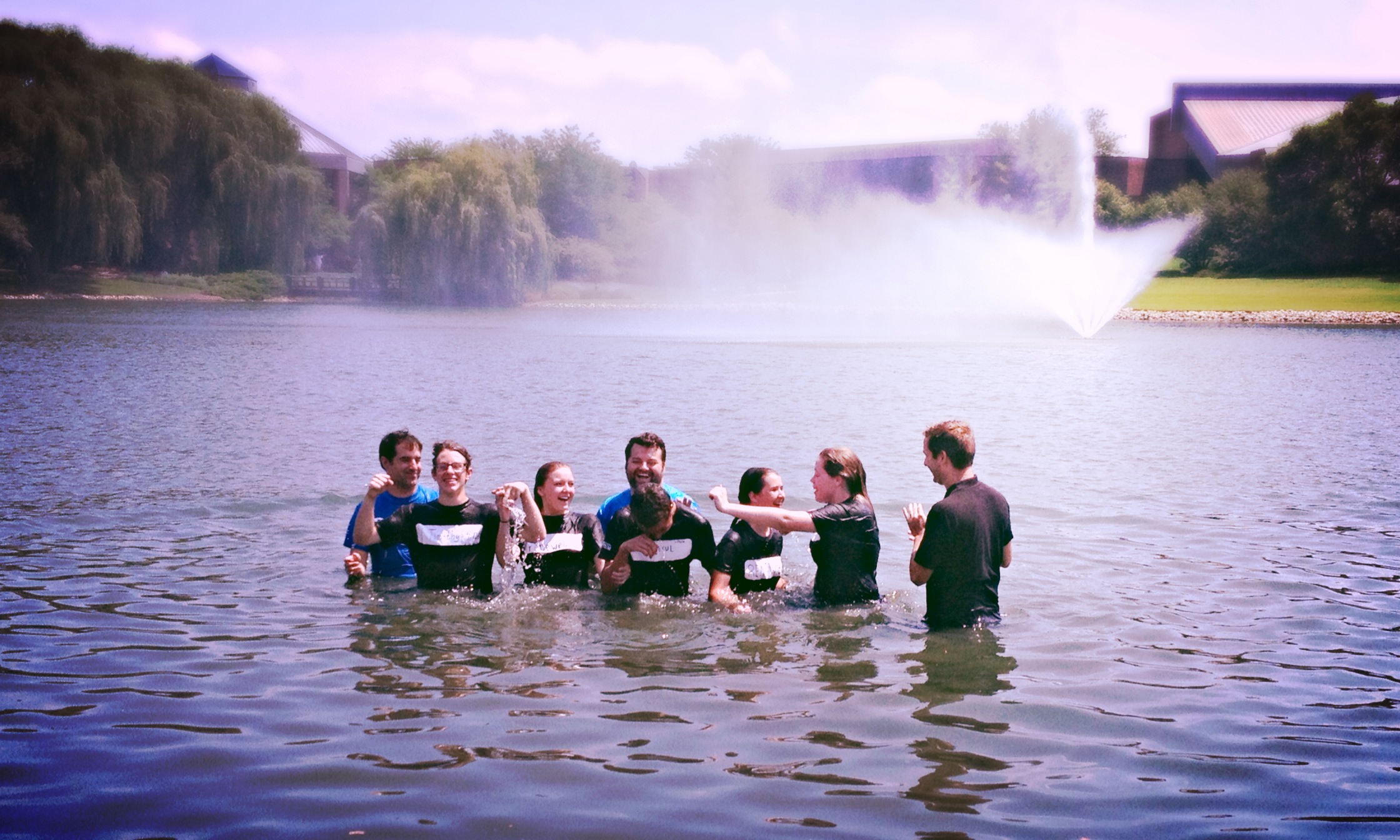
Yesterday, our church held their annual baptism at the lake. Baptisms are always moving and encouraging, as hundreds of people make a declaration of their faith in Jesus Christ and lift their hands in freedom. The presence of God was thick as I sat on Pier 1, greeting each middle school and high school student (135 students total) before they entered the water. At the end of the baptism, all the volunteers gathered to offer up prayers of thanksgiving to God who moved in the hearts of the 658 people who got baptized. What a blessing and privilege it was to be a part of God’s work in that way.
When I went home that afternoon, I wrestled with questions that first entered my mind when I was baptized 6 years ago and continued to stay there as I studied church history throughout college. What exactly is baptism? Why is it a sacrament? Why are we commanded to do it? Is there saving grace in baptism? What age should someone be baptized at? Do people have to fully ‘get it’ before they are baptized? If it is just a public declaration, why would we elevate the qualifications for baptism? How does the way we practice baptism vary from that of the first century church? Is there something different about a person after baptism?
My questions could go on and on. Thankfully, my amazing roommates were around last night to discuss, debate, and discover more deeply what baptism is about. For hours, we sat on our living room floor sharing our half-formulated opinions. Katie often played devil’s advocate, Megan rose her hand and shared examples from her life, I spoke about how I ultimately didn’t know my theological beliefs on baptism. We dug in the Scriptures examining Jesus’ baptism and those of others who choose to follow suit. I opened the Didache, a first century church manual to see what they said about baptism. The Didache emphasized a mentor guiding a new Christian through fasting and forgoing the things of the world to enter into a new Way of Life with a new Family. Baptism was a big deal to them.
I couldn’t reconcile the fact that Jesus called baptism a sacrament, but we make it a simple declaration. In my heart, I felt that there was more. As we continued to bounce ideas around, we thought about the other sacraments and what they meant. In the sacrament on marriage, a couple proclaims their love for each other in front of a crowd of witnesses who are given the responsibility to uphold them to their commitment. Maybe baptism isn’t that different.
In baptism, we publicly declare our love and devotion to Jesus Christ. There is a crowd of witnesses around. While our love for Jesus may not drastically change from the time we enter the water to the time we exit, everyone now knows how we intend to live our lives – in a covenant with him.
I believe that all too often, we focus on faith of the person being baptized and completely disregard the witnesses who surround them. In a marriage ceremony, the audience is charged with the responsibility of holding the couple accountable to live their lives in devotion to one another and in devotion to God. Similarly, I believe that in baptism, the person in the water makes a public declaration of accountability to those who surround, and those who surround are invited into their faith walk.
What if our baptism talks addressed two groups of people: those getting baptized, and those who are involved in their lives? Those of us who have been baptized have a responsibility to our newly saved or newly declared brothers and sisters. They are now a part of a family who have openly professed the name of Jesus, and we are now journeying together.
I don’t want to watch person after person get baptized without them knowing that they are not alone; their declaration has brought them into something much larger. Just as they have shown boldness in getting baptized, we must show boldness in entering in with them. The Didache paints a beautiful picture of the community surrounding baptism: The “family” fasts with the person as they prepare to be baptized, showing solidarity with them as they begin to forgo their former way of life. As soon as the person is baptized, they are brought into a literal circle of their closest friends who dry them off and give them a new robe. After the ceremony, they break their fast and celebrate communion together.
Yesterday, I watched as a group of high school students get baptized after serving on a missions trip together. It is my hope and prayer that they would continue the journey together and that we as the Church would do so as well.
 Liz Schauer
Leave a comment